
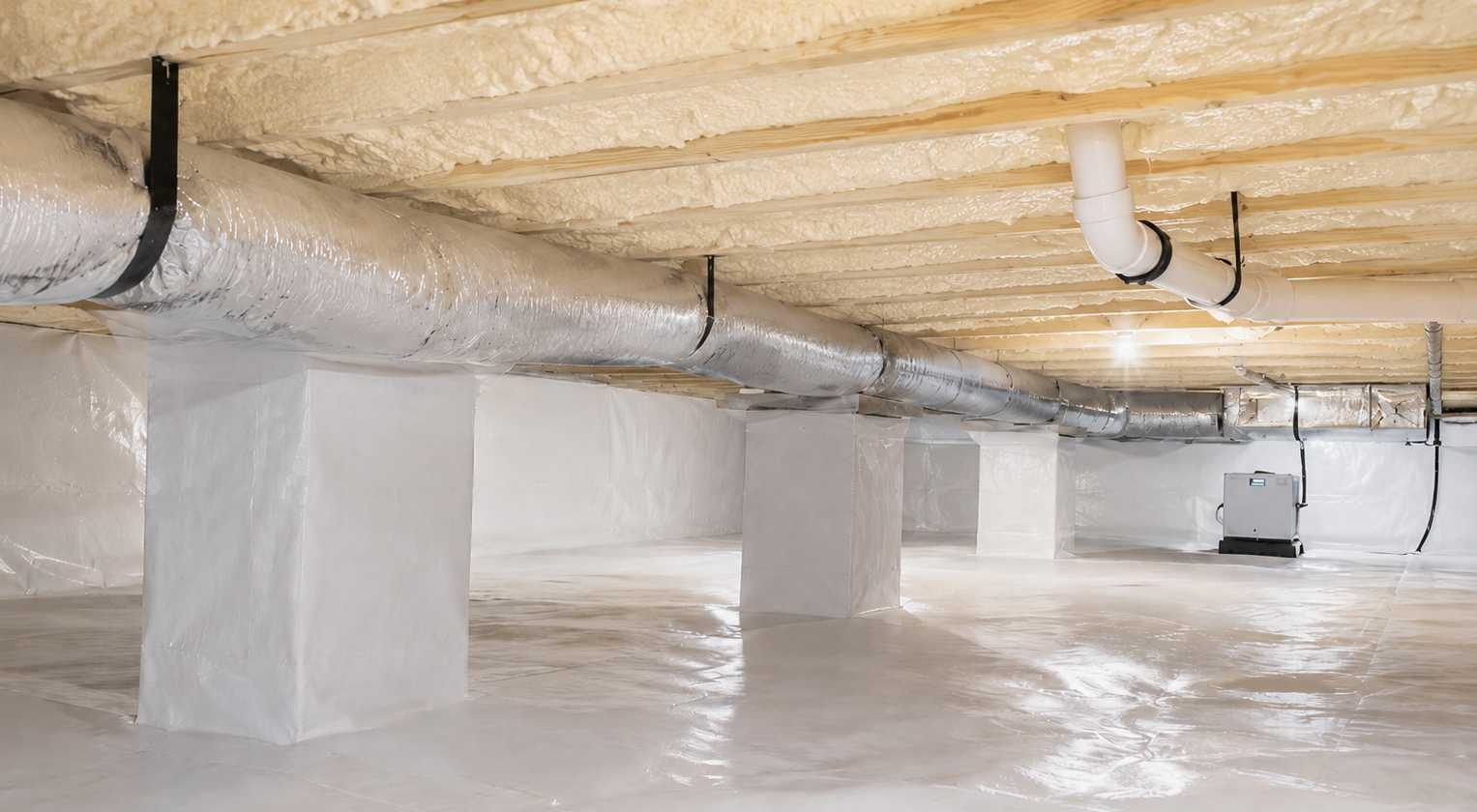
Avoid Insulation Moisture Issues with Crawl Space Encapsulation in Springfield Missouri
Crawl space insulation can help improve comfort and energy efficiency, but the wrong type of insulation can also create additional moisture problems. Before choosing or replacing insulation, homeowners should make sure their crawl space is dry, protected, and properly evaluated by a trusted local waterproofing company like Dog Gone Waterproofing.
-
- Crawl spaces are naturally prone to moisture from ground vapor, humidity, condensation, plumbing leaks, poor drainage, and outside air infiltration.
- Batt insulation is affordable and common, but it can also absorb moisture, sag, trap humidity against wood, and contribute to mold concerns when the crawl space is damp.
- Spray foam and rigid foam board insulation offer better moisture resistance, but they still work best when your crawl space environment is dry and controlled.
- Moisture control should come before any insulation upgrades because water problems can damage insulation, wood framing, indoor air quality, and the overall health of your home.
- A local crawl space inspection can help identify the source of any water problems and determine whether your home needs a vapor barrier, drainage improvements, encapsulation, dehumidification, or other waterproofing solutions.
- Dog Gone Waterproofing helps homeowners address crawl space moisture problems before they turn into bigger insulation, mold, or structural concerns.
Let’s take a closer look at each of these main points in more detail.
Eliminate Crawl Space Moisture Before Choosing Insulation
When homeowners start thinking about improving their crawl space, insulation is often one of the first upgrades that comes to mind.
Better insulation can help with comfort, energy efficiency, and protecting the home from temperature swings.
But the wrong type of insulation will actually make an existing crawl space moisture problem even worse.
At Dog Gone Waterproofing, we regularly inspect crawl spaces where the insulation is part of the moisture problems.
This is especially common when moisture, humidity, poor drainage, plumbing leaks, or mold concerns have gone unnoticed for too long.
No matter what type of insulation is installed in your crawl space, the most important question is whether your crawl space environment is dry, protected, and properly controlled.
If you notice water, musty odors, sagging insulation, mold growth, or damp conditions under your home, it makes sense to work with a local waterproofing company you can trust before making any decisions about insulation.
We can help you identify where any crawl space moisture is coming from and recommend a plan to protect your crawl space from long-term damage.
Your Crawl Space Is Naturally Vulnerable To Moisture
Your crawl space is one of the most moisture-prone areas of your home. Because it sits below the living space and close to the ground, it is constantly exposed to conditions that can lead to dampness.
Ground moisture can rise from exposed soil. Humid outside air can enter through vents or gaps.
Rainwater can collect around the foundation if drainage is poor. Condensation can form on pipes, ductwork, insulation, and wood framing.
Plumbing leaks can also introduce water without being noticed right away.
These types of conditions create issues because insulation is not designed for a wet crawl space.
If the crawl space is damp, the insulation may eventually absorb moisture, trap humidity, deteriorate, or hide mold growth.
Even insulation materials that handle moisture better than others still perform best when the crawl space itself is dry and properly protected.
That’s why we recommend evaluating your crawl space environment before your insulation.
A dry crawl space gives your insulation a much better chance of doing its job.
A wet crawl space can turn even a well-intended home improvement project into a bigger and more expensive problem later.
Batt Insulation Affordable But Causes Problems In Damp Crawl Spaces
Fiberglass batt insulation is one of the most common types of insulation found in crawl spaces. Many homeowners choose it because it is widely available and relatively inexpensive to purchase.
Under the right conditions, batt insulation can perform adequately. But the problem is that many crawl spaces are not the right conditions.
Batt insulation absorbs and holds moisture. Once it gets wet, it can be difficult to fully dry.
Over time, it may begin to sag, compress, pull away from the floor joists, or fall down completely.
When batt insulation traps humidity against wood framing, it can contribute to an environment where mold and wood deterioration become more likely.
At Dog Gone Waterproofing, we often see crawl spaces where batt insulation is stained, damp, damaged, or holding musty odors.
Sometimes the issue started with a small plumbing leak. Other times, the problem came from condensation, poor drainage, standing water, or excessive humidity.
In some homes, pests have damaged the insulation or used it as nesting material, which creates even more concern.
The biggest issue is that batt insulation can hide what is happening above it.
Moisture problems may be developing against the floor system, but the homeowner may not see the damage until the insulation is pulled back or begins falling down.
By that point, the crawl space may need more than simple insulation replacement.
Batt Insulation Works Better When The Crawl Space Is Properly Controlled
Batt insulation isn’t always the wrong choice. In a crawl space that has been properly sealed, encapsulated, protected with a quality vapor barrier, and kept dry year-round, those risks are reduced.
If the crawl space has no existing mold concerns, no drainage issues, and no active moisture problems, batt insulation will perform better than it would in an open, damp, or poorly controlled crawl space.
But homeowners should understand that those risks never disappear completely.
A future plumbing leak, sump pump failure, foundation seepage issue, drainage problem, or moisture event can still soak batt insulation and create concerns quickly.
Once that happens, the insulation may need to be removed and replaced, and the underlying moisture issue will still need to be corrected.
This is why a professional crawl space inspection is so important.
We can help determine whether batt insulation is creating problems, whether moisture is present, and whether your crawl space needs waterproofing, encapsulation, drainage improvements, or dehumidification before you work on the insulation.
Spray Foam Insulation Offers Strong Performance, But Moisture Still Matters
Spray foam insulation is often viewed as one of the better-performing crawl space insulation options because it resists moisture absorption better than fiberglass batt insulation.
It can also help air seal the crawl space, reduce drafts, improve energy efficiency, and create a more durable insulation layer when installed properly.
Because spray foam does not hold water the same way batt insulation can, it is often less likely to become a mold-supporting material on its own.
That can make it appealing for homeowners who want a longer-lasting option in a crawl space environment.
But spray foam insulation is not a substitute for waterproofing.
If water is entering the crawl space, if humidity is too high, or if drainage around the foundation is poor, those issues still need to be addressed.
Spray foam insulation can also be more expensive upfront, and it can be more difficult to remove later if repairs are needed.
Proper installation is extremely important, and some homes may require additional evaluation based on moisture conditions, building materials, and local code requirements.
Before investing in spray foam insulation, it is wise to have your crawl space inspected by a local waterproofing professional.
We can help homeowners understand whether your crawl space is dry enough for insulation improvements or whether moisture control should come first.
Rigid Foam Board Insulation Common In Encapsulated Crawl Spaces
Rigid foam board insulation is another option commonly used in crawl space encapsulation systems.
It is often installed along crawl space walls rather than between floor joists.
When installed correctly, foam board can provide good moisture resistance, durability, and energy efficiency.
Foam board can work especially well as part of a larger crawl space improvement plan.
In many cases, that plan may include sealing air leaks, installing a vapor barrier, improving drainage, and managing humidity.
When the crawl space is treated as a complete system, foam board can help support a cleaner, drier, more efficient environment under your home.
The quality of the installation matters as much as the materials. Gaps, seams, and edges need to be sealed properly to reduce air movement and improve performance.
Depending on the product and application, additional fire protection or code considerations may also apply.
Like any other insulation option, foam board insulation works best when any underlying moisture conditions have already been addressed.
Moisture Control Should Always Come Before Insulation Decisions
The most important lesson for homeowners is that insulation should not be your top priority when a crawl space has moisture problems. A dry crawl space is the foundation for everything else.
If water is getting in, humidity is too high, or mold is already present, replacing insulation without fixing the source of the moisture problem will only provide temporary improvement.
We recommend starting with a crawl space evaluation. Our goal is to determine why moisture is present and what needs to be done to stop it.
In some homes, that may involve installing or improving a vapor barrier.
In others, it may require drainage improvements, crawl space encapsulation, sump pump solutions, foundation moisture repairs, or dehumidification.
If plumbing leaks are contributing to the issue, those need to be addressed as well.
Once your crawl space moisture is under control, choosing the right insulation becomes much easier.
More importantly, the insulation has a better chance of lasting longer and performing the way it should.
Water Problems Should Never Be Ignored Regardless Of Insulation Type
Some homeowners assume that if they have spray foam or foam board insulation, moisture is less of a concern.
Others assume that if their batt insulation looks mostly intact, their crawl space must be fine.
Unfortunately, water problems can affect any crawl space, regardless of their insulation type.
Moisture can damage wood framing, contribute to mold concerns, create musty odors, attract pests, and affect the comfort of the home above.
It can also make insulation less effective over time.
Even a small amount of water or humidity can become a bigger problem if the source is not identified and corrected.
That’s why it makes sense to call a local waterproofing company you can trust as soon as you notice any warning signs in your crawl space.
If you see fallen insulation, damp soil, standing water, condensation, musty smells, visible staining, or signs of mold, Dog Gone Waterproofing can inspect your crawl space and help you understand what is happening.
We know that homes in the Ozarks often deal with Spring storms, humidity, clay soil conditions, drainage challenges, and foundation moisture concerns that require practical, long-term solutions.
The Cheapest Insulation Isn’t Always The Most Cost-Effective
Batt insulation might save money upfront, but it can become expensive if it leads to repeated replacement, mold remediation, pest damage, or hidden moisture problems.
More expensive insulation options may not deliver their full benefit if your crawl space is still damp, poorly sealed, or exposed to uncontrolled humidity when you install it.
The best investment is creating a crawl space environment that stays dry and protected. Once that foundation is in place, the insulation decision becomes much more practical and less risky.
Our professional crawl space inspection can help prevent homeowners from spending money in the wrong order.
Trust Dog Gone Waterproofing For Crawl Space Moisture Solutions
If you’re not sure what type of insulation would work best for your crawl space, the first step is to find out whether your crawl space is dry enough to support it.
If there are already water problems, musty odors, mold concerns, or insulation damage, those issues should be addressed before making any insulation upgrades.
We help homeowners identify crawl space moisture problems and create practical solutions to protect their homes.
Whether your crawl space has batt insulation, spray foam, foam board, or no insulation at all, crawl space water problems should never be ignored.
The sooner you understand what is happening underneath your home, the easier it is to prevent bigger damage and more expensive repairs.
If you notice damp conditions, fallen insulation, musty smells, standing water, or signs of mold in your crawl space, contact Dog Gone Waterproofing to schedule a crawl space inspection and waterproofing assessment today.